

Table of Contents
One of the most important decisions taken when building or running a website is the selection of the appropriate WordPress hosting. A quality hosting company will make sure your website loads fast, stays safe, can expand easily as your business expands, and will be available to assist you when you need it.
Choosing the right host helps you avoid performance issues, downtime, and security risks, ensuring your website stays fast, stable, and trustworthy.
This is a detailed guide to everything you need to know about WordPress hosting types and who to choose. This will assist you in making the right choice for your website and know which of the best WordPress hosting suits you.
What Does WordPress Hosting Mean?
WordPress hosting is a type of web hosting that is set to give the best performance to websites that have been developed using the WordPress content management system. In contrast to generic hosting, WordPress hosting services perform effectively with WordPress, are safe and are also easy to manage.
The most reputable WordPress hosting providers offer automatic updates on WordPress core. Additional features that are frequently provided by hosting providers include automatic backups, staging environments where changes can be tested before becoming live, and built-in developer tools like SSH and WP-CLI.
These applications will make sure that, as a beginner or a more advanced user, you will manage your site without having to go through so many technical complications.
Key Considerations When Choosing WordPress Hosting
1. Speed and Performance
The speed of the websites directly affects user experience, conversion rates and search engine positions. Fast-loading websites keep visitors engaged and help reduce bounce rates. Thus, the infrastructure provided by a hosting provider should be considered when selecting a provider.
It can be integrated with a Content Delivery Network (CDN) to serve content by servers as close as possible to your visitors, which greatly increases the performance of global audiences.
2. Security Features
WordPress websites are highly susceptible to attacks by hackers, so security is a critical factor to consider. A trustworthy hosting company will also feature strong security, like free SSL certificates, malware scanners, web application firewalls (WAF), and denial of service (DDoS).
Other managed hosting companies use their own security systems, which provide a proactive response to ensure the attacks do not take place. It is also important to have backups. It is critical in the event of data loss, unintentional or deliberate faults, or data assaults.
3. Scalability
Increases in hosting can be based on the growth of your website traffic or the increase in content and functionality. Although shared WordPress hosting can be used in case of small blogs or personal websites, business organizations with growth potential need to be wary of scalable hosting types.
Cloud, VPS and dedicated hosting plans also provide you with the possibility to upgrade RAM, storage and bandwidth without transferring to a new server.
4. Ease of Use
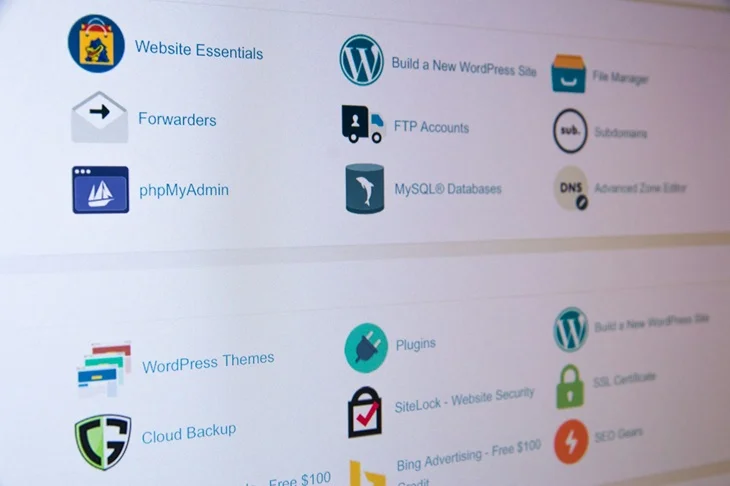
Hosting companies commonly provide dashboard applications such as cPanel, Plesk, or custom apps that provide an easy way to manage files, databases, domains, and email accounts. Single-click installations of WordPress, staging, and automatic updates save a lot of time and minimize the chances of errors.
A user-friendly dashboard enables the owners of a site to concentrate on the content and operation of their business.
5. Customer Support
A trustworthy service will either make or break your experience with a hosting service. Find hosts that offer 24/7 services either through live chat, phone, or email. Those providers who hire WordPress specialists will also be effective in solving the technical problems.
Other hosts go as far as migrating to a different server, conflict of plugins, or site problems, and this makes you sure that you will be saved anytime you need to.
WordPress Hosting Types You Need to Know
WordPress hosting is available in various hosting types and has different features and advantages. Shared, managed, dedicated, VPS, and cloud hosting are explained below so that you can select the best WordPress hosting.
1. Shared Hosting
Shared WordPress hosting is the least costly and the simplest form of hosting, where more than one site is hosted on the same server. Although this is cost-effective and less demanding to install, shared hosting tends to have longer load times under heavy load, and you cannot customize server configurations as much as you would like.
Shared WordPress hosting is appropriate for small websites, blogs & personal projects that are not likely to get high traffic and require advanced settings.
2. Managed Hosting
Managed WordPress hosting offers the hands-off model in which the hosting company handles server administration, upkeep, security, and back-ups. These services are usually in the form of performance optimization, caching, and staging environments. Managed hosting can be a perfect solution for agencies, businesses, or non-technical customers that desire peace of mind and performance.
3. VPS Hosting
VPS (Virtual Private Server) hosting is at a middle position between cost and performance. Although you continue to share physical hardware with other users, VPS hosting offers physical resources like RAM, storage, and CPU that gives you greater control. VPS hosting enables a custom server environment to be deployed; therefore, it fits the growing websites as they require performance.
4. Cloud Hosting
Cloud WordPress hosting is based on the services of many servers, which host a website, and the resources are distributed to provide high availability, shorter response times and reliability. Cloud hosting enables websites to be scaled fast because it serves to allocate more resources when the traffic is high.
Cloud service providers can provide additional functionality like failover and redundancy, which is automatic, and therefore is a perfect option for expanding businesses, eCommerce stores, and websites with high traffic.
Final Thought
Choosing the best WordPress hosting is a key factor in the success of websites. The decision that you make should strike a balance between speed, security, support, scalability and cost.
To make it easier to maintain, begin with a managed WordPress hosting company such as Hostinger, in case you are not certain. For growing companies or agencies, VPS, dedicated, or reseller hosting can be what they need to grow effectively.
It is imperative to keep in mind that a hosting provider can affect the performance of your websites, their reliability, and usability directly. Proper hosting investment will see you grow your business together with the website.
You May Also Like:
- How To Try WordPress Without Hosting Or Domain For Free
- How to Connect WordPress Website to FTP (Step-by-Step Guide)
- How to Fetch Data From an API in WordPress Easily
What is WordPress Hosting?
WordPress hosting is a form of web hosting that is optimized for WordPress websites. It offers such features as better security and faster performance to make sure your WordPress site is running fine.
What is the best way to host a WordPress website?
You will require a hosting and a domain name. WordPress can be easily installed with a single-click hosting system provided by many hosting companies, which will make the installation a lot easier.
What is the most appropriate WordPress hosting organization?
SiteGround, Hostinger, and Bluehost are the best WordPress hosting providers. They all have various features and expenses, hence the one that fits best depends on the needs, budget, and size of your site.
Is it possible to use WordPress without hosting?
Yes, you can open a WordPress site with WordPress.com, which provides free hosting with some restrictions on customization. Nevertheless, the self-hosted WordPress.org provides you with complete control and freedom, so the most ideal for most users.
What is the cost of WordPress hosting?
The cost of hosting with WordPress depends on the kind of hosting you choose. The cheapest shared WordPress hosting costs as low as $1.95/month, but VPS, cloud, or dedicated hosting costs between $5.99 to $149/month or more, depending on the features and resources needed.